Home Inspection Costs in 2026: What You'll Actually Pay
Home inspection costs range from $250 to $800+ depending on home size, age, and location. Here's the full breakdown for 2026.
Quick Answer: A standard home inspection in 2026 costs between $300 and $550 for most single-family homes. Add specialty tests like radon or termite and you're looking at $400–$750 total. High-cost metro areas push those numbers 30–35% higher.
Home inspections are one of the few parts of a real estate transaction where you pay $300–$600 to potentially save yourself tens of thousands. Yet buyers routinely get blindsided by the cost — or worse, skip the inspection altogether to save money.
This guide breaks down exactly what you'll pay in 2026, why prices vary so much, and how to make sure you're not overpaying.
How Much Does a Home Inspection Cost?
The national average home inspection cost sits at $340–$420 for a standard single-family home in a suburban market, according to the American Society of Home Inspectors (ASHI) 2025 annual pricing survey. That gets you 2–4 hours of a licensed inspector's time, a written report, and coverage of all major systems.
But "average" hides a lot. Your actual number depends on four factors: square footage, home age, location, and what add-on tests you include.
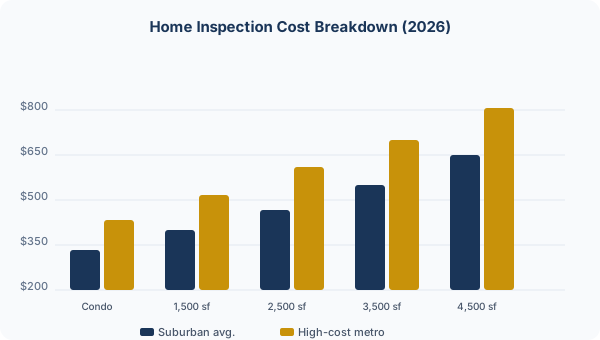
Cost by Home Size
Square footage is the primary driver:
- Under 1,000 sq ft (condo/townhome): $250–$375
- 1,000–1,999 sq ft: $310–$425
- 2,000–2,999 sq ft: $375–$525
- 3,000–3,999 sq ft: $475–$625
- 4,000+ sq ft: $600–$800+
Inspectors generally take 1.5–2 hours for a condo and 3–4 hours for a larger home. The price reflects that time.
Cost by Home Age
Older homes cost more to inspect — period. A home built in 1960 has different systems than one built in 2010, and inspectors need more time to evaluate aging wiring, original plumbing, and older structural materials.
- New (0–5 years): 10% below standard rate
- 10–20 years: Standard rate
- 20–40 years: 10–15% above standard
- 40+ years: 25–30% above standard
A 1970s ranch that would be $400 as a newer home might run $520+ once the age factor is applied.
Cost by Region
Location shapes what inspectors charge as much as any other factor.
- Rural areas: $250–$400 — lower overhead, but inspectors may charge travel fees
- Suburban: $300–$500 — national baseline
- Urban: $350–$600 — higher labor and insurance costs
- High-cost metros (NYC, SF, Boston, Seattle): $500–$800 — expect to pay at the top of every range
If you're in the San Francisco Bay Area, a standard 2,000 sq ft home with radon testing can easily run $650–$750. In rural Kentucky, the same home might be $320.
What Do Add-On Inspections Cost?
A general inspection covers the home's major systems and structure. Specialty tests go deeper into specific risks:
| Specialty Test | Typical Cost |
|---|---|
| Radon testing | $100–$175 |
| Termite/wood-destroying organism (WDO) | $75–$150 |
| Mold testing (air sampling) | $250–$400 |
| Sewer line camera scope | $150–$325 |
| Pool/spa inspection | $100–$200 |
| Well water testing | $75–$150 |
| Septic system inspection | $200–$350 |
Not every home needs every test. Radon is worth adding in high-risk zones (check EPA maps). Sewer scope is smart for homes 30+ years old. You can use our home inspection cost calculator to build your specific estimate with any combination of tests.
What's Included in a Standard Inspection?
According to ASHI's Standards of Practice, a general home inspection covers:
- Structural components: Foundation, framing, roof structure
- Roofing: Coverings, drainage, flashings, skylights
- Exterior: Siding, windows, doors, grading
- Plumbing: Supply and drain lines, water heater, fixtures
- Electrical: Panel, wiring, outlets, GFCI protection
- HVAC: Heating and cooling systems, ductwork, filters
- Insulation and ventilation: Attic, crawl space, mechanical ventilation
- Interior: Walls, ceilings, floors, stairs, fireplaces
What inspectors typically don't cover: inside walls, buried utilities, underground oil tanks, swimming pools (unless added), septic systems (unless added), or anything they can't safely access.
How to Get the Best Value on a Home Inspection
Cheap isn't always better. An inspector charging $175 for a 4-hour job is almost certainly cutting corners or rushing. A few ways to make sure you're getting good value:
- Check credentials first. Look for ASHI or InterNACHI membership. Both require ongoing education and adherence to standards of practice.
- Ask about the report format. The best inspectors produce digital reports with photos, descriptions, and severity ratings — often delivered within 24 hours.
- Attend the inspection. Walking through with the inspector is worth as much as the written report. Ask questions. See the issues firsthand.
- Bundle tests when possible. Inspectors often discount radon and termite tests when combined with a general inspection — sometimes saving $30–$75.
- Don't negotiate on price. The inspection fee is tiny relative to what it protects. Pressure an inspector to lower their rate and they may rush the job.
Is a Home Inspection Worth the Cost?
One story answers this: A buyer in suburban Chicago paid $475 for an inspection on a $315,000 home. The inspector found a failing sump pump, a cracked heat exchanger in the furnace, and evidence of wood rot in the rim joists. Repair estimates: $12,000–$18,000. The buyer renegotiated $9,500 off the purchase price.
The inspection paid for itself 20 times over.
Even when inspections find nothing major, they deliver something equally valuable: confidence. You know what you're buying. Use our inspection cost estimator to budget before you make an offer — then don't skip the inspection to save a few hundred dollars.
Frequently Asked Questions About Inspection Costs
Can I negotiate the inspection fee? You can ask, but reputable inspectors rarely discount their rates. If an inspector immediately agrees to a 20% cut, that's a red flag about their value.
Do inspectors charge differently for condos? Yes — condos typically cost 20–35% less than single-family homes of the same square footage, because the inspector skips the exterior, roof, and foundation (the HOA owns those structures).
What happens if the inspection finds major problems? You can renegotiate the purchase price, ask the seller to make repairs, or walk away using your inspection contingency. Learn more in our guide on how to negotiate after a bad home inspection.